Events

May 2023
Lecture - The British East India Company and the American Revolution
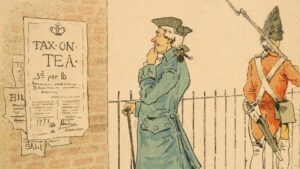
On May 10, 1773, Parliament passed the Tea Act, which instituted a tax of three cents per pound on all British tea sold in America. The act effectively granted a monopoly on the sale of tea in the American colonies to the British East India Company, which was looking to reduce its excessive stores of tea and relieve its financial burdens. To commemorate the 250th anniversary of the Tea Act’s passage, James Vaughn, professor of history at the University of…
Find out more »June 2023
Author's Talk - Disunion Among Ourselves: The Perilous Politics of the American Revolution
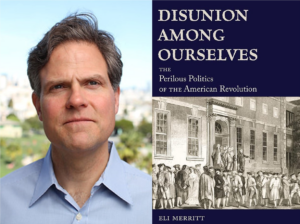
Far from a harmonious collaboration, the Continental Congress during the Revolutionary War was so filled with political strife that the delegates feared the Revolutionary War would end in disunion or civil war. But instead of disbanding, these founders managed to unite for the sake of liberty and self-preservation, forging grueling compromises and holding the young nation together. Political historian Eli Merritt, Ph.D., discusses his new book and explores the deep political divisions that almost tore the Union apart during the…
Find out more »Lunch Bite - A Short-Barreled Blunderbuss From the Period of the American Revolution

Historical Programs Manager Andrew Outten discusses a British blunderbuss that was made commercially in London, ca. 1770-1780. A precursor to the shotgun, this weapon was often issued to cavalry or naval troops for use in close-quarter combat. This Lunch Bite will offer not only a detailed examination of a blunderbuss from the Institute’s museum collections, but also a discussion pertaining to the history of blunderbusses, their technical components and attributes and their various potential uses throughout the American Revolution. Registration…
Find out more »Author's Talk - Prisoners of Congress: Philadelphia's Quakers in Exile, 1777-1778
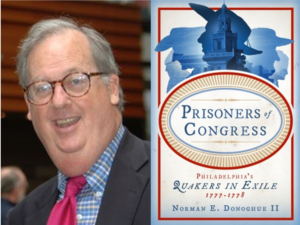
In 1777, Congress labeled a group of Philadelphia Quakers who refused to help defend the city against the imminent invasion by British troops as “the most Dangerous Enemies America knows.” They ordered Pennsylvania to apprehend them. In response, state officials sent twenty men—seventeen of them Quakers—into exile, banishing them to Virginia, where they were held for over seven months. Reconstructing this moment in American history through the experiences of four families—the Drinkers, Fishers, Pembertons and Gilpins—historian Norman Donoghue discusses how the…
Find out more »Author's Talk - Washington's Marines: The Origins of the Corps and the American Revolution, 1775-1777
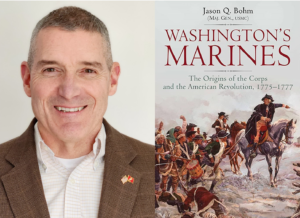
In the early days of the Revolutionary War, the Continental Congress rushed to form an army but soon realized that, to win its freedom, America would need men who could fight both on land and sea. Enter the Marines. As Washington struggled to preserve his command after defeats in New York and New Jersey in 1776, the nascent U.S. Navy and Marines deployed the first American fleet, conducted their first amphibious operation, and waged a war on the rivers and…
Find out more »